The Language of Form and Function: Decoding Haakke Symbols in Modern Practice
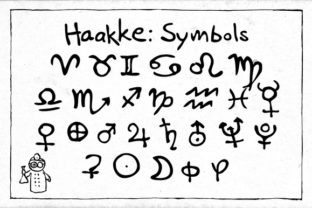
Haakke Symbols represent a relatively unexplored yet increasingly relevant visual language that bridges abstract meaning with practical application. Unlike conventional notations that rely on rigid alphabets or numeric systems, these symbols operate on a logic of spatial arrangement, relational emphasis, and contextual layering. For professionals across design, engineering, data visualization, and cognitive science, understanding how Haakke Symbols function opens new pathways for representing complex ideas without the noise of verbose description.
What Defines a Haakke Symbol System
At its core, a Haakke Symbol is not a single glyph but a modular unit whose meaning shifts depending on orientation, grouping, and adjacency. This fluidity is deliberate. Where standard notation systems often fail to capture non-linear relationships—think of the difficulty in mapping emotional tone alongside technical specification—Haakke Symbols accommodate multiple dimensions of information within a single visual field.
Each symbol carries three inherent properties:
- Positional value — the location of the symbol within a structured field determines whether it functions as a subject, modifier, or relational connector
- Gestalt weight — the visual thickness, contour, and density of the stroke convey intensity, priority, or temporal urgency
- Contextual drift — the same symbol placed in different symbolic neighborhoods may adopt nuanced meaning, much like a word shifts sense in different sentences
These properties make Haakke Symbols particularly suited for fields where static notation fails. Educators working with abstract mathematical concepts have noted that students grasp relational logic faster when using these symbols compared to traditional equation formats. The reason may lie in the brain's natural preference for spatial reasoning over symbolic manipulation—a phenomenon well documented in cognitive load theory.
User Experience and Interface Design
UX researchers have begun adopting Haakke Symbols as a mapping tool during early prototyping phases. Instead of writing lengthy user flow narratives, teams sketch interaction patterns using symbol sequences that encode both action and emotional state. For example, a looped symbol variant indicates repeated behavior, while a tapered symbol suggests diminishing engagement. This allows stakeholders to scan entire user journeys at a glance, identifying friction points without reading paragraphs of annotation. One agency reported a 30 percent reduction in revision cycles after introducing Haakke-based wireframing into their workflow.
Knowledge Management and Note Structuring
Knowledge workers drowning in digital notes have found Haakke Symbols useful for creating non-linear structures. Instead of hierarchical folders, users embed symbols into their notes to represent connections, contradictions, or pending synthesis. A circle with a crossbar might denote a concept that conflicts with another tagged note, while a stacked diamond indicates a recurring theme across disparate sources. This approach aligns with the principles of personal knowledge management, where meaning emerges from connection rather than isolation.
Educational Curriculum Design
Curriculum developers in STEM fields have integrated Haakke Symbols to teach systems thinking. When students learn to represent feedback loops, delays, and multipliers using these symbols, they transition from memorizing formulas to understanding dynamic behavior. A high school physics program in the Pacific Northwest replaced half of its vector diagram units with Haakke-based exercises and observed measurable improvement in students' ability to reason about forces in two dimensions. The symbols acted as cognitive scaffolds, reducing the abstraction barrier that often hinders novice learners.
Creative Direction and Brand Strategy
Creative directors use Haakke Symbols to encode brand attributes before verbalizing them. A brand's tone, visual density, and relational posture toward its audience can be sketched using a small set of symbols, then decoded by cross-functional teams. This practice prevents the common problem where verbal brand guidelines become overly prescriptive or vague. Instead, the symbol set becomes a shared reference that designers, copywriters, and strategists can consult without misinterpretation.
Advantages Over Conventional Notation Methods
The primary advantage of Haakke Symbols lies in their economy of representation. A single arrangement can convey what might require a paragraph of prose or a multi-variable equation. This compression is not merely about brevity—it reduces cognitive friction during decision-making. When executives review strategic roadmaps rendered in Haakke notation, they can grasp trade-offs between speed, quality, and cost without drilling into appendices.
Another significant advantage is cross-cultural interpretability. While words and numerals require translation, Haakke Symbols rely on spatial and geometric logic that transcends language. Teams operating across Japanese, German, and Portuguese markets have used the same symbol set for project planning without losing fidelity. This does not mean the symbols are universally understood without training—but the learning curve is shallow compared to mastering a natural language or programming syntax.
Furthermore, Haakke Symbols exhibit adaptive granularity. A novice user may work with a simplified subset of twenty basic forms, while an advanced practitioner can combine variants and modifiers to express subtle distinctions. This scalability makes the system suitable for both quick sketches and formal documentation. The same symbol vocabulary can serve a brainstorming session and a technical specification, provided the user defines the context before use.
Real-World Case Observations
In urban planning workshops, facilitators have used Haakke Symbols to map stakeholder values onto physical space. Residents unfamiliar with architectural drawings could still place symbols representing safety, accessibility, or community interaction onto a neighborhood map. The resulting composite image revealed zones of agreement and conflict that traditional surveys had missed. This inclusive approach empowered non-experts to participate in design decisions meaningfully.
Software developers have applied Haakke Symbols to architectural decision records. Instead of writing lengthy rationales for choosing one database over another, teams capture the trade-off space as a symbol diagram. Months later, engineers revisiting the decision can read the symbol arrangement and immediately understand the constraints that shaped the choice. This reduces the knowledge loss that occurs when team members leave or projects pause.
A fascinating application comes from therapeutic settings, where clients use Haakke Symbols to externalize emotional patterns. Individuals with alexithymia—difficulty identifying feelings—can select symbols that match their internal state without needing verbal labels. Therapists report that this visual bridge accelerates the development of emotional vocabulary and self-awareness. While not a replacement for dialogue, the symbols provide a starting point for conversations that might otherwise stall.
Considerations for Adoption
Despite its strengths, adopting Haakke Symbols requires mindful implementation. The system's flexibility can become a liability if users do not establish shared conventions. A symbol that one team member interprets as "urgent" may read as "pending" to another. Groups adopting the system should invest in a brief onboarding session where they agree on a common symbol lexicon for their specific domain.
Another consideration is digital tool support. While hand-drawn symbols work well on paper or whiteboards, not all software platforms render Haakke notation cleanly. Some teams have created custom fonts or SVG libraries, while others rely on drawing tablets and image embedding. As the community around Haakke Symbols grows, more native support is likely to emerge in diagramming and note-taking applications.
There is also the risk of over-symbolization—the temptation to encode everything in symbols even when prose would be clearer. Good practice dictates using Haakke Symbols for relationships, patterns, and trade-offs, while reserving natural language for context, narrative, and nuance. The most effective users treat symbols as a supplement, not a replacement, for clear communication.
Looking Ahead: The Evolving Role of Haakke Symbols
As information density increases across every profession, tools that compress complexity without losing meaning become essential. Haakke Symbols occupy a unique niche between art and logic, offering a visual shorthand that respects the brain's natural pattern-seeking ability. Researchers in computational linguistics are exploring whether a formal grammar can be derived from Haakke practice, potentially enabling machine parsing of symbol diagrams. If successful, this could allow automated systems to read symbol-mapped workflows and generate code or documentation from them.
For now, the most compelling reason to engage with Haakke Symbols is their capacity to reveal structure where none was visible. A project manager overwhelmed by spreadsheets may find clarity in a symbol diagram that shows resource dependencies and bottlenecks. A student struggling with systems dynamics may unlock understanding through spatial arrangement. The symbols do not provide answers—they provide a lens through which patterns become apparent.
Whether you are a researcher documenting complex phenomena, a designer shaping user experiences, or a business owner mapping strategic initiatives, the deliberate practice of working with Haakke Symbols can refine how you think about relationships, priorities, and flow. The system invites you to see not just what is present, but how things connect—and in a world overflowing with information, that connective clarity is rare and valuable.