Beyond the Burn: How Up in Flames Too Is Reshaping Visual Storytelling for Professionals
In an era where content is consumed at breakneck speed and attention spans are measured in milliseconds, the ability to command focus has become a premium skill. Marketers, creators, and entrepreneurs are constantly searching for tools that not only capture attention but also communicate depth, emotion, and transformation. Enter Up in Flames Too — a creative resource that has quietly become a cornerstone for professionals who need to depict destruction, renewal, and dramatic change in their visual narratives.
But to understand why Up in Flames Too is gaining traction, we need to look beyond the surface of what it offers and examine the broader shifts in how professionals approach visual content, storytelling, and audience engagement. This is not merely about adding fire effects to a photograph. It is about leveraging the language of transformation to communicate ideas that resonate on a primal level.
What Exactly Is Up in Flames Too?
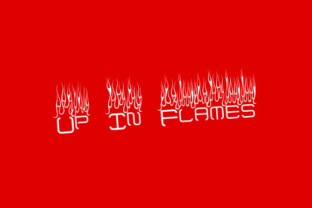
At its core, Up in Flames Too is a specialized collection of curated visual assets — textures, overlays, presets, and compositing elements — designed to help creatives integrate fire, smoke, embers, and atmospheric destruction into their work with a high degree of realism and artistic control. It is the successor to an earlier toolkit that focused on similar effects, but this iteration expands the palette, improves fidelity, and responds to the growing demand for flexibility in post-production workflows.
Rather than offering one-size-fits-all solutions, Up in Flames Too emphasizes modularity. Users can layer elements selectively, adjust opacity, blend modes, and color grades, and integrate them into existing projects without sacrificing the integrity of the original image or footage. This makes it equally useful for a photographer crafting a surreal portrait, a filmmaker building a post-apocalyptic scene, a graphic designer creating a campaign visual, or a brand strategist developing a metaphor for disruption and reinvention.
The Broader Shift: Visual Metaphors in a Saturated Market
One of the most significant trends in professional content creation over the past few years is the move away from literal representation and toward visual metaphor. Audiences have become highly adept at reading imagery. A generic stock photo of handshake no longer communicates trust; it communicates laziness. Meanwhile, a striking image of something burning — a logo, a product, a landscape — can evoke transformation, urgency, catharsis, or even hope, depending on how it is framed.
Up in Flames Too taps directly into this trend. Fire is one of the most potent universal symbols. It represents both destruction and purification, chaos and warmth, endings and beginnings. For professionals who need to tell stories about disruption — whether it's a startup challenging an industry, a brand pivoting after a crisis, or a creative project that breaks conventions — fire offers a vocabulary that words alone cannot achieve.
Consider a marketing campaign for a company that has undergone a radical redesign. Instead of a sterile before-and-after comparison, the creative team might use Up in Flames Too to visually "burn away" the old identity, leaving the new one emerging from the ashes. The metaphor is immediate, emotional, and memorable. It respects the audience's intelligence while delivering a clear message.
Why Professionals Are Paying Attention
The growing interest in Up in Flames Too is not accidental. Several converging forces explain why this specific toolkit has resonated with a wide range of professionals, from solo freelancers to in-house creative teams.
Demand for Authentic Visuals
There is a palpable fatigue with over-polished, sterile content. Audiences are drawn to imagery that feels raw, textured, and even dangerous. Fire effects, when executed well, introduce an element of unpredictability and imperfection that feels more honest than a perfectly lit studio shot. Up in Flames Too provides the raw materials for this authenticity, allowing creators to introduce organic noise, flickering light, and chaotic particle systems that mimic real combustion.
Efficiency Without Compromise
Time is the most constrained resource for modern professionals. Shooting practical fire effects on set is expensive, time-consuming, and often unsafe. Compositing them from scratch requires deep technical skill. Up in Flames Too bridges this gap by offering pre-shot, high-resolution elements that are ready to drop into a project with minimal adjustment. For a marketing agency working on a tight deadline for a product launch, this can mean the difference between a campaign that is merely good and one that is unforgettable.
Cross-Industry Applicability
The toolkit is not limited to one niche. Photographers use it to add drama to portraits or fashion editorials. Filmmakers integrate it into VFX plates for independent productions. Social media managers create eye-catching thumbnails and ads. Brand strategists create presentation visuals that make an impact in boardrooms. This versatility is a major reason why Up in Flames Too has found a home across such a diverse professional landscape.
Changing Workflows and Creative Expectations
The rise of tools like Up in Flames Too reflects a deeper shift in how professionals approach the creative process. There is a growing expectation that high-end visual effects should be accessible to individuals and small teams, not just Hollywood studios. The democratization of visual storytelling has raised the bar for everyone. A freelancer today is expected to produce work that rivals what a full agency could deliver a decade ago.
This has led to a new kind of workflow: one that relies heavily on curated asset libraries combined with personal artistic input. Rather than building every effect from scratch, professionals assemble, modify, and layer pre-existing elements to create something unique. Up in Flames Too fits this model perfectly. It provides the raw power of fire effects without dictating the final composition. The user remains the author; the toolkit is simply a more sophisticated set of brushes.
Moreover, the expectations of clients and audiences have changed. A static image or a flat video no longer suffices for many contexts. There is a demand for depth, atmosphere, and narrative weight. Adding a subtle layer of smoke or a flickering glow can transform a mundane product shot into a scene that suggests tension, excitement, or transformation. Professionals who incorporate these elements into their work are finding that their output commands higher engagement, better recall, and stronger emotional responses.
Practical Examples Across Professions
To understand the real-world value of Up in Flames Too, it helps to look at how different professionals are actually using it.
Independent Filmmakers and Video Producers
In low-budget productions, practical fire effects are often impossible due to safety regulations, insurance costs, or location restrictions. Up in Flames Too allows filmmakers to add fire to scenes during post-production with a level of realism that holds up on screen. A short film about a character's inner turmoil might show a photograph burning in slow motion, with embers drifting across the frame. The emotional subtext is clear, and the execution is production-quality without the production cost.
Brand and Marketing Professionals
For brand campaigns centered on themes of renewal, disruption, or resilience, fire imagery can be powerfully symbolic. A tech company launching a new product that replaces an older, outdated model might use Up in Flames Too to create visuals of the old product line "burning away" to make room for the new. This is not just visually striking; it communicates a narrative of progress and obsolescence that resonates with audiences familiar with the rapid pace of innovation.
Social Media Content Creators
In the crowded landscape of social media, standing out requires visuals that stop the scroll. Creators use Up in Flames Too to create dramatic profile banners, video thumbnails, and story content that leverages the inherent intensity of fire. A fitness coach might use fire imagery to represent the "burn" of a workout, while a life coach might use it to symbolize burning away old habits. The toolkit gives them the visual raw material to make these metaphors vivid and shareable.
Graphic Designers and Art Directors
For print and digital campaigns, fire effects can add a layer of grit and urgency. A poster for a music festival, a book cover for a thriller, or a billboard for a bold new brand — all can benefit from the controlled chaos that Up in Flames Too provides. The modular nature of the assets means designers can scale, rotate, and tint the effects to match the overall aesthetic without losing quality.
Connecting to Larger Industry Trends
The relevance of Up in Flames Too extends beyond the realm of visual effects. It sits at the intersection of several larger developments in the professional landscape.
The experience economy: Consumers increasingly value experiences over products, and they expect brands to deliver emotionally resonant content. Fire imagery creates an immediate visceral experience, even through a screen. Brands that use such tools are better positioned to create memorable interactions that foster loyalty and sharing.
The shift toward visual-first communication: Whether it's TikTok, Instagram, or presentation software, visual communication dominates. Professionals who cannot produce compelling visuals are at a disadvantage. Resources like Up in Flames Too level the playing field, giving non-specialists access to high-end effects that amplify their message.
The rise of hybrid creatives: The era of the specialist is giving way to the era of the hybrid professional — someone who can write, design, film, edit, and market. These professionals need tools that are powerful yet intuitive, and that allow them to achieve professional results across multiple disciplines. Up in Flames Too is designed for exactly this kind of multifaceted workflow.
Why This Matters Now
The timing of Up in Flames Too's emergence and adoption is not coincidental. We are in a period of widespread disruption across industries — economic uncertainty, technological acceleration, and shifting consumer behaviors. Professionals are under pressure to communicate change, to acknowledge difficulty, and to offer visions of renewal. Fire is the symbol that captures all of these dynamics in a single, powerful image.
Moreover, the tools for creating such imagery have reached a tipping point in terms of accessibility and quality. What once required a dedicated VFX artist and a week of rendering can now be accomplished by a single professional in a few hours, using assets like those in Up in Flames Too. The result is that more creators can participate in visual storytelling at a higher level, which raises the overall quality of content across the board.
For the professional who is paying attention, the message is clear: the ability to work with symbolic, emotionally charged visuals is no longer optional. It is a core competency. Whether you are a marketer, an entrepreneur, a designer, or a freelancer, the resources you choose to incorporate into your workflow directly affect the impact and reach of your work. Up in Flames Too is one such resource — not because it is flashy, but because it addresses a fundamental need in modern visual communication: the need to say something meaningful, quickly, and memorably.
Final Observations
The professional landscape is defined by constant change. The tools and techniques that worked five years ago are often insufficient today. What remains constant is the human need for stories that resonate, for images that evoke feeling, and for messages that cut through noise. Up in Flames Too is not a revolution in itself, but it is a tool that enables revolution — in the way professionals think about composition, metaphor, and emotional impact.
By understanding how to harness fire as a visual element, professionals across every field can add a layer of depth to their work that goes beyond decoration. They can communicate transformation, urgency, and hope. They can create visuals that audiences not only see but feel. And in a world where attention is the scarcest resource, that feeling is everything.
Up in Flames Too is more than a collection of effects. It is a response to the changing needs of a professional world that demands more from its visual language. For those willing to explore its potential, it offers a pathway to more powerful, more authentic, and more resonant storytelling.